.png)
Fertility Myths People Still Believe & What Science Actually Says
Raghad Altoubah- Reproductive & Fertility Medical Writer

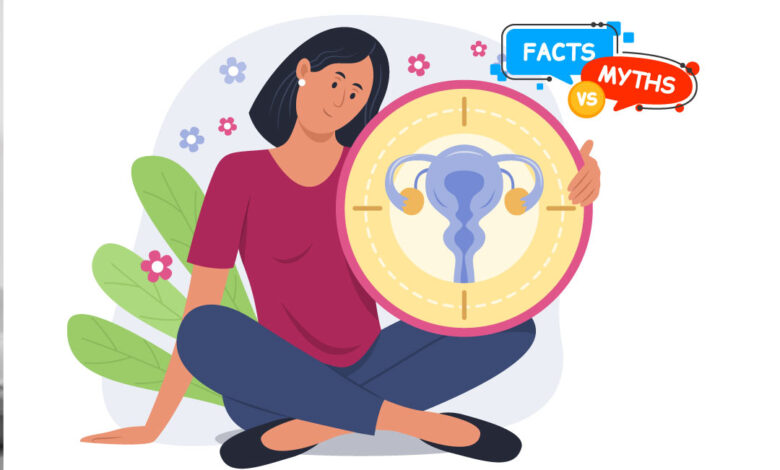
If you’re over 25 and thinking about your future: whether that includes children now, later, or not at all … chances are you’ve heard strong opinions about fertility.
“Just relax and it will happen.”
“IVF always works.”
“If you already have one child, you’re fine.”
“It’s usually the woman’s problem.”
These statements sound confident. Reassuring. Sometimes even comforting.
But many of them are wrong.
Let’s separate fertility myths from medical reality!! using evidence, not assumptions.

➤ Myth #1: “If You’re Healthy, You’ll Get Pregnant Easily”
Being healthy absolutely supports fertility. But Fertility is more complex than diet, gym workouts, or avoiding junk food.
Pregnancy requires: Regular ovulation, Healthy sperm production, Open fallopian tubes, Balanced hormones, A receptive uterus.
According to the World Health Organization, Infertility affects around 1 in 6 people globally. Many of them are otherwise healthy.
You can run marathons and still have blocked tubes, you can eat perfectly and still have low ovarian reserve, you can look fit and have abnormal sperm parameters.
Health helps. It does not guarantee fertility.
➤ Myth #2: “Infertility Is Mostly a Woman’s Problem”
This belief is outdated.
➜ Data from American Society for Reproductive Medicine shows:
- About 30–40% of infertility cases are male-factor
- 30–40% are female-factor
The rest are combined or unexplained
Sperm quality worldwide has shown concerning trends in recent decades. Male fertility is not immune to lifestyle, age, environmental toxins, obesity, smoking, or stress.
If a couple struggles to conceive, both partners must be evaluated. Testing only the woman delays diagnosis and treatment.
➤ Myth #3: “You Can Wait Until 40 .. IVF Will Fix It”
This is one of the most dangerous myths.
Yes, assisted Reproductive technologies like In vitro fertilisation (IVF) have helped millions of families. But IVF does not reverse biological aging.
Female fertility declines gradually after 30, more noticeably after 35, and significantly after 40.
➜ Success rates depend heavily on age:
- Under 35: higher success rates
- 40+: significantly lower per cycle
- 43–44+: dramatically reduced with own eggs
Even the Centers for Disease Control and Prevention reports that live birth rates per IVF cycle drop substantially with maternal age.
Technology supports biology. It does not replace it.
If you’re delaying parenthood for career, financial, or personal reasons, that’s valid. But make decisions informed by biology, not Instagram headlines.
➤ Myth #4: “If You Already Have a Child, You’re Safe”
Secondary infertility is real.
➜ A couple who conceived easily once may later struggle due to:
- Age-related decline
- Hormonal changes
- Endometriosis
- Sperm quality changes
- New medical conditions
Fertility is dynamic. It changes over time.
➤ Myth #5: “Unexplained Infertility Means Nothing Is Wrong”
“Unexplained infertility” does not mean imaginary.
➜ It means:
- Ovulation appears normal
- Tubes are open
- Semen analysis is within standard range
- Basic hormone levels are normal
Yet pregnancy does not occur after 12 months (or 6 months if over 35).
➜ Standard tests cannot measure:
- Egg quality directly
- Subtle sperm functional defects
- Implantation-level molecular issues
Unexplained does not mean untreatable. It means medicine has limits and treatment strategies are tailored accordingly.
➤ Myth #6: “Stress Alone Causes Infertility”
Stress can influence hormones and sexual behavior. But it is rarely the sole cause of infertility.
Telling someone to “just relax” is not medical advice .. it is dismissal.
Infertility is a medical condition, not a mindset failure.
➤ Myth #7: “Regular Period = Normal Fertility”
➜ You can have regular cycles and:
- Diminished ovarian reserve
- Endometriosis
- Poor egg quality
Men can have normal libido and erection and still have low sperm concentration or motility.
Fertility cannot be judged by appearances.
★ The Bigger Picture: Why These Myths Persist
Fertility is deeply emotional. It connects to identity, relationships, culture, and timing.
➜ So people prefer comforting narratives:
“It will happen when it’s meant to.”
“You’re still young.”
“Modern medicine can fix anything.”
But biology doesn’t respond to reassurance … It responds to time.
➤ When Should You Seek Help?
➜ Evidence-based guidelines suggest evaluation if:
- You are under 35 and trying for 12 months without success
- You are 35 or older and trying for 6 months
- You have irregular cycles
- You have known endometriosis, PCOS, or prior pelvic surgery
- There is known male factor risk
- Early assessment does not mean rushing into treatment. It means understanding your baseline.
★ What You Can Do Today
- Know your age-related fertility window
- Consider basic fertility testing if unsure
- Involve both partners early
- Get information from medical professionals, not social media
The earlier you understand it, the more options you keep.