.png)
Age and Fertility: Real Statistics, Real Choices
Raghad Altoubah - Reproductive & Fertility Medical Writer

- At 27, you rarely think about fertility.
- At 32, someone casually says, “Don’t wait too long.”
- At 36, the tone changes.
Let’s pause here!!
Fertility is not a ticking time bomb. It’s Biology. And Biology follows patterns. Understanding those patterns without panic or pressure helps you make decisions based on reality, not myths.
This is what the science actually says
➤ The Biology Behind Age and Fertility
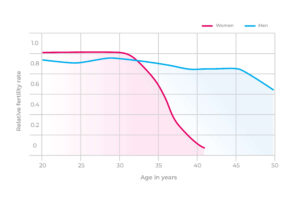
➜ Women are born with all the eggs they will ever have about 1–2 million at birth. By puberty, that number drops to around 300,000–400,000. At menopause, you will have 1,000 to 2,000 eggs remaining Over time, both egg quantity and quality decline.
➜ Men, on the other hand, continue producing sperm throughout life, but sperm quality gradually changes with age.
Age affects both sexes. The timeline just looks different.
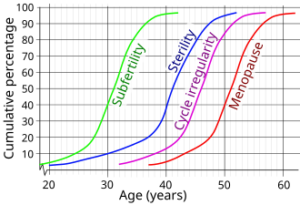
➤ Female Fertility by Age: What the Data Shows
Large population studies give us fairly consistent patterns.
➜ In Your 20s
- Monthly chance of pregnancy (if trying): ~25–30%
- Miscarriage rate: ~10%
- Highest egg quality and lowest chromosomal error rate
This is peak Biological fertility. Not a social recommendation just Physiology.
➜ Early 30s (30–34)
- Monthly chance of pregnancy: ~20–25%
- Miscarriage rate: ~12–15%
- Fertility begins a gradual decline, not a cliff
Most women who start trying in their early 30s conceive within a year.
➜ Mid to Late 30s (35–39)
- Monthly chance of pregnancy: ~10–15%
- Miscarriage rate: ~20–25%
- Increased risk of chromosomal abnormalities
- At 35, fertility does not “collapse.” But decline becomes more measurable.
According to data from organizations such as the American Society for Reproductive Medicine and the Centers for Disease Control and Prevention, about 1 in 3 women aged 35–39 may experience difficulty conceiving within a year
➜ 40 and Beyond
- Monthly chance of pregnancy: ~5%
- Miscarriage rate: 30–40%
- Egg quantity and quality significantly reduced
Pregnancy at 40+ is absolutely possible. It is simply statistically less likely without medical support.
➤ Male Fertility and Age: The Overlooked Side
Men are often told they have “unlimited time.” That’s not accurate.
➜ After 40:
- Sperm motility declines
- DNA fragmentation increases
- Time to pregnancy increases
- Risk of certain genetic conditions slightly rises
Research published in journals like Human Reproduction shows paternal age over 45 is associated with higher risks of autism spectrum disorders and some rare genetic conditions.
The change is gradual, not catastrophic but real.
➤ The 35 Myth: Where Did It Come From?
You’ve probably heard that 35 is a magic line.
Historically, this age was used because the risk of chromosomal conditions such as Down syndrome began to exceed the risks of amniocentesis in older medical practice.
It was a clinical threshold, not a biological expiration date.
Today, with improved screening, we understand fertility as a continuum, not a switch
➤ Assisted Reproduction: How Age Affects IVF
Age strongly influences outcomes in Fertility treatment.
According totNational data reported by the Centers for Disease Control and Prevention:
- IVF live birth rate per cycle under 35: ~40–50%
- Age 38–40: ~20–25%
- Over 42: <10% using own eggs
When donor eggs from younger women are used, success rates remain high regardless of the recipient’s age.
That tells you something important: Egg age matters more than uterine age.
➤ What Age Does Not Mean
Age does not mean:
- You are infertile after 35
- You must panic at 30
- You cannot conceive naturally at 40
- You should make rushed life decisions
It simply shifts probabilities. And probabilities are not destiny.
➤ The Bigger Picture: Life Planning vs. Biological Planning
Modern life shifted:
- Longer education
- Career building
- Later partnerships
- Financial considerations
- Biology did not shift at the same pace.
This mismatch creates tension not because people are irresponsible, but because society evolved faster than human ovaries.
Ignoring the data doesn’t protect you. Panicking doesn’t empower you. Knowing where you stand does.
Fertility declines gradually in the early 30s and more noticeably after 35.
★ Men are affected by age too just more slowly.
★ Technology helps, but age remains the strongest predictor of success.
This is not about fear.
It’s about informed choice.
➜ If you’re 28, you don’t need urgency, you need awareness.
➜ If you’re 34, you don’t need panic, you need planning.
➜ If you’re 39, you don’t need shame, you need data and options.
Biology sets probabilities. You decide what to do with them.