
.png)
Pregnancy After Cancer Treatment: What You Need to Know
Raghad Altoubah- Reproductive & Fertility Medical Writer


Reproductive Health | Fertility After Cancer | Evidence-Based Guide
Pregnancy After Cancer Treatment
What You Need to Know
A cancer diagnosis can feel like it rewrites your entire future, including the one where you become a parent.
But here is the truth: thousands of cancer survivors go on to have healthy pregnancies every year. With the right knowledge, the right team, and the right timing, parenthood after cancer is not just a dream. For many people, it becomes a beautiful reality.
Can Cancer Treatment Really Affect Fertility?
Yes, and it is one of the most important conversations to have before treatment begins. Chemotherapy, radiation, and surgery can all affect the reproductive system in different ways, depending on the type of treatment, the dose, and where it is directed in the body.
Chemotherapy drugs, particularly alkylating agents such as cyclophosphamide, are known to damage eggs and sperm.
Radiation to or near the pelvis can affect the uterus and ovaries. Hormone-sensitive cancers, like certain breast or prostate cancers, may require treatments that temporarily or permanently suppress reproductive hormones.
The encouraging news is that the field of oncofertility, the specialty dedicated to protecting fertility in people with cancer, has grown tremendously. According to the American Society for Reproductive Medicine (ASRM) and the European Society of Human Reproduction and Embryology (ESHRE), fertility preservation should be discussed with all patients of reproductive age before cancer treatment begins.
Protecting Your Fertility Before Treatment
If you have just received a cancer diagnosis and you know that parenthood is part of your future plans, do not wait.
Ask your oncologist about a referral to a fertility specialist on the same day if possible. Time is genuinely precious here, and most fertility preservation procedures can be done quickly without significantly delaying cancer treatment.
For Women and People with Ovaries
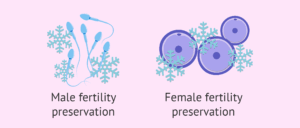
- Embryo freezing (embryo cryopreservation): The most established method. Eggs are retrieved, fertilized with a partner’s or donor’s sperm, and the resulting embryos are frozen for future use.
- Egg freezing (oocyte cryopreservation): Eggs are retrieved and frozen without fertilization. A strong option for people without a partner. ESHRE now considers this a standard, non-experimental procedure.
- Ovarian tissue freezing: A surgical option that removes and freezes ovarian tissue for reimplantation later. This has led to successful pregnancies and is increasingly available worldwide.
- Ovarian shielding: If radiation is being used near but not at the pelvis, lead shielding can reduce exposure to the ovaries.
For Men and People with Testes
- Sperm banking (sperm cryopreservation): The simplest and most effective option. A semen sample is collected and frozen before treatment begins. This is widely available, quick, and covered by many insurance plans.
- Testicular sperm extraction: For men who cannot produce a sample through ejaculation, sperm can sometimes be retrieved directly from the testes.
After Treatment Ends: How Long Should You Wait?
This is one of the most common questions cancer survivors ask, and the answer varies depending on the type of cancer, the treatment received, and your overall health. That said, most oncologists and reproductive specialists generally recommend waiting at least 6 to 24 months after the end of treatment before attempting a natural or assisted pregnancy.
Why wait? Treatment drugs need time to clear from the body, and the first months after treatment are often when any recurrence would become apparent. Waiting also allows your body to recover and your hormone levels to stabilize, which creates a healthier environment for pregnancy.
For people who have been on hormone-suppressing therapies, such as tamoxifen for hormone receptor-positive breast cancer, the recommended wait is often longer and must be carefully managed with your oncology team.
ESHRE and ASRM both emphasize that these decisions should be made collaboratively between your oncologist and a reproductive medicine specialist.
Can Pregnancy Affect Cancer Recurrence?
This is a fear that many survivors carry. The reassuring answer, based on the current body of evidence, is that pregnancy after cancer treatment does not appear to increase the risk of cancer returning in most cases.
A landmark analysis published in the Journal of Clinical Oncology found no increased risk of recurrence among breast cancer survivors who became pregnant after treatment, compared to those who did not. Similar findings have been observed in survivors of cervical cancer, thyroid cancer, and lymphoma.
Every cancer type is different, and some hormone-sensitive cancers require extra caution and individualized guidance. But the blanket assumption that pregnancy is dangerous after cancer is increasingly being challenged by real-world data. Open this conversation with your care team without fear.
What Does Pregnancy After Cancer Actually Look Like?
Many cancer survivors conceive naturally. Others use the embryos, eggs, or sperm they preserved before treatment. Some explore donor options or gestational surrogacy, particularly when the uterus has been affected by treatment or surgery.
Pregnancies in cancer survivors are generally considered higher risk and benefit from close monitoring by both an obstetrician with maternal-fetal medicine expertise and your oncology team. Depending on what treatments you received, your care team may watch more closely for certain pregnancy complications such as preterm labor, blood pressure issues, or cardiac changes.
Children born to cancer survivors do not have a significantly higher rate of birth defects or health problems compared to the general population. Research consistently supports this finding, and it is one of the most important pieces of reassurance for survivors who worry about the health of a future child.
Men and Fertility After Cancer: The Conversation We Often Skip
Fertility after cancer is not only a women’s issue, and it is important to say that clearly. Men treated with chemotherapy or radiation may experience reduced sperm count, poor sperm motility, or temporary or permanent azoospermia (the absence of sperm in semen).
Sperm production can sometimes recover after treatment ends, particularly in younger men and those who received less gonadotoxic regimens. A semen analysis performed 12 to 24 months after completing treatment can give a clearer picture of reproductive function.
If sperm were banked before treatment, those samples can be used in conjunction with intrauterine insemination (IUI) or in vitro fertilization (IVF) with intracytoplasmic sperm injection (ICSI) when the time is right.
Building Your Reproductive Care Team
If you are a cancer survivor thinking about pregnancy, you should not have to navigate this alone. Look for a care team that includes:
- A reproductive endocrinologist (fertility specialist) with oncofertility experience
- Your oncologist, who can advise on the safety of attempting pregnancy given your specific cancer history
- A maternal-fetal medicine specialist (MFM) for high-risk pregnancy monitoring once you conceive
- A mental health professional experienced in cancer survivorship, because the emotional weight of this journey is real and deserves dedicated support
The Bottom Line: Hope Is Evidence-Based
A cancer diagnosis does not close the door on parenthood. The science of oncofertility has advanced dramatically, and the evidence consistently shows that pregnancy after cancer is possible, safe for most survivors, and unlikely to increase the risk of recurrence.
What matters most is acting early, asking questions without hesitation, finding a care team that sees the whole you, and knowing that the goal you are working toward is one that countless survivors have already reached.
Your story is not over. In many ways, this chapter is just beginning.
This article is intended for informational purposes only and does not replace personalized medical advice. Always consult your oncologist and a reproductive specialist before making any fertility-related decisions.