.png)
The Science Behind Every Fertility Breakthrough
Raghad Altoubah- Reproductive & Fertility Medical Writer

What is a randomized clinical trial, and why should you care? A plain-language guide for anyone on a reproductive health journey
“Every treatment your doctor recommends, every medication, every protocol, every breakthrough in IVF exists because someone, somewhere, ran a very specific kind of experiment. It’s called a Randomized Clinical Trial (RCT). And understanding it could change how you navigate your own health decisions.”
You may have heard your doctor mention “clinical trial data” or seen phrases like “evidence-based medicine” in fertility clinic brochures. But what does that actually mean? And why does it matter to you! someone who just wants to understand their options and make the best decision for their body and their family?
Let’s break it all down. Just a clear, honest look at the research method that has shaped modern Reproductive Medicine and why you deserve to understand it.
➤ First: Why Do We Even Need Clinical Trials?
Imagine two women, let’s call them Ana and Sofia. Both are 32. Both are going through their first IVF cycle. Their doctors have a choice: use Protocol A or Protocol B to stimulate their ovaries. Both protocols seem reasonable. But which one actually works better?
Without research, a doctor’s answer would be based on habit, gut feeling, or what they learned in medical school 20 years ago. That’s not good enough. Not for Ana. Not for Sofia. Not for you.
This is exactly the problem clinical trials were designed to solve. They replace guesswork with proof.
The freeze-all embryo strategy, the OHSS-free clinic concept, progesterone supplementation in luteal phase support, all of these became standard Reproductive Medicine practice because Randomized Clinical Trials proved they worked. Behind every routine step in your fertility journey, there is a trial that said: “Yes. This helps. Here is the proof.”
So… What Exactly Is a Randomized Clinical Trial?
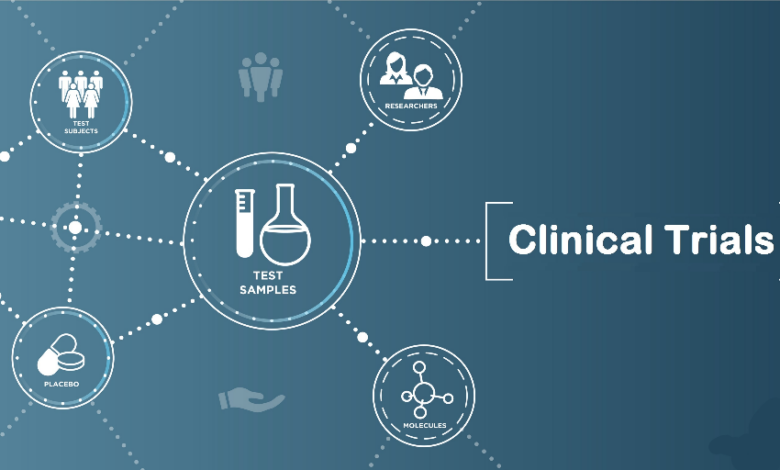
A randomized clinical trial or RCT for short: is a carefully designed scientific study that compares two or more treatments, medications, or approaches to find out which one works best (and which one is safest).
★ Here’s how it works, step by step:
Step 1. A research question is asked: For example; “Does taking melatonin before egg retrieval improve egg quality in women with poor ovarian response?”
Step 2. Volunteers are recruited: People who meet specific criteria, age range, diagnosis, health status, agree to participate. Their informed consent is always required.
Step 3. Participants are randomly assigned: Think of it like a coin flip. Half the group receives Treatment A; the other half receives Treatment B (or a placebo). Nobody picks who goes where — it’s truly random. This is the “randomized” part.
Step 4. The trial runs, often “blinded.” : In many trials, neither the participant nor the doctor knows who is receiving which treatment. This eliminates psychological bias. It keeps the results honest.
Step 5. Data is collected and analyzed: Researchers compare outcomes, pregnancy rates, side effects, live birth rates across both groups using rigorous statistical methods.
Step 6. Results are published and peer-reviewed: Other scientists scrutinize the study before it is accepted into a medical journal. If it passes review, it becomes part of the body of evidence that guides clinical practice.
➤ Why “Randomized”? Why Does That Word Matter So Much?
Here’s a thought experiment. Imagine a fertility clinic notices that patients who eat Mediterranean diets seem to have better IVF outcomes. Does that mean diet causes better results?
Not necessarily. Women who eat well might also exercise more, have less stress, have higher socioeconomic status, or attend more follow-up appointments. Any of those factors, not the diet, could explain the better results. This is called confounding: when other variables cloud the picture.
Randomization is the elegant solution. By randomly assigning participants to groups, researchers ensure that all those background differences: age, weight, stress levels, diet, ethnicity are spread equally across both groups. They cancel each other out. What’s left is a clean comparison of the one thing being tested.
Randomization does not just make studies more scientific. It makes them more fair. It ensures the results are not shaped by who is richer, healthier, or luckier. But by the actual effect of the treatment itself. In reproductive medicine, where so many personal factors influence outcomes, that fairness is not just scientific, it is ethical.
RCTs vs. Other Types of Studies
Not all research is created equal. Here’s a quick comparison:
➜ RCT (Randomized Clinical Trial): Participants are randomly assigned to treatment or control groups. Strongest proof of cause and effect. Can be expensive and time-consuming.
➜ Observational Study: Researchers observe without assignment. Good for identifying patterns, but cannot prove causation.
➜ Case Report: Documents one or a few individual cases. Useful for rare conditions, but not generalizable.
➜ Expert Opinion: Based on experience and judgment. Practical and context-aware, but subject to bias.
➜ Systematic Review / Meta-analysis: Combines results from multiple RCTs. Represents the highest overall level of evidence, but is only as good as the trials included.
In medicine, we speak of a “hierarchy of evidence.” RCTs sit near the very top. Systematic reviews and meta-analyses which pool the results of many RCTs .. sit at the peak.
This is the gold standard your fertility specialist should be drawing from.
➤ RCTs in Reproductive Medicine: The Numbers
Over 40 years of RCTs have powered IVF protocol improvements. More than 8 million babies have been born via IVF a technology proven by clinical trials. Thousands of active fertility RCTs are registered globally at any given time.
Every major advance in reproductive medicine, from gonadotropin stimulation protocols and embryo freezing techniques to preimplantation genetic testing and uterine microbiome research, was built on the foundation of RCTs. When a fertility specialist recommends a luteal phase support protocol, there is a clinical trial behind that recommendation. When researchers debate whether acupuncture improves IVF outcomes, they turn to RCTs for answers.
★ But Wait!! Are RCTs Always Perfect?
Honest answer: No. And a good medical communicator will always tell you this.
RCTs have real limitations in reproductive medicine specifically. Fertility patients are not a homogeneous group, your diagnosis, age, ovarian reserve, uterine environment, and lifestyle are deeply individual. A trial that shows Protocol A works better “on average” may not reflect what works best for you.
Some trials are also small, short, or funded by pharmaceutical companies with financial interests! which is why peer review, transparency of funding, and replication across multiple independent trials all matter enormously.
The goal of good evidence-based medicine is never to follow a single trial blindly. It is to combine the best available evidence with clinical expertise and your individual values and circumstances. That three-part formula (evidence + expertise + your voice) is what world-class reproductive care looks like.
Understanding that a recommendation is based on an RCT gives you the right to ask: “How large was that trial? Were people like me included? What were the dropout rates? Were there any conflicts of interest?” You are not being difficult. You are being an informed patient. And informed patients tend to have better experiences, and better outcomes.
★ What About Men? RCTs Matter in Male Fertility Too
Male factor infertility contributes to about 40–50% of all cases of infertility, yet it is historically under-researched. That is changing slowly but surely, thanks to RCTs now being conducted on sperm DNA fragmentation treatments, antioxidant supplementation for sperm quality, varicocele repair outcomes, and lifestyle interventions in men with subfertility.
If you are a man navigating a fertility journey, you deserve the same level of evidence-based guidance as your partner. Ask your andrologist or urologist: “Is this recommendation supported by randomized trial data?” That question is never out of place.
➤ Should I Ever Join a Clinical Trial?
Possibly, and it might be one of the most empowering decisions you make. Participating in a well-designed RCT gives you access to cutting-edge treatments before they are widely available, close monitoring from a specialized research team, and the knowledge that you are contributing to science that will help future patients.
Participation is always voluntary. You can withdraw at any time. Ethical trials are reviewed by independent ethics committees (Institutional Review Boards) that exist solely to protect you.
To find registered, active reproductive medicine trials, visit ClinicalTrials.gov the world’s largest database of clinical studies. It’s free, public, and searchable by condition and location.