
.png)

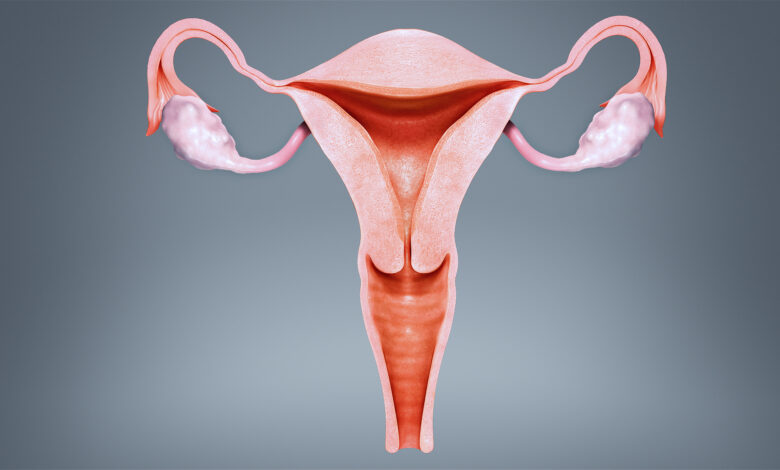
The Female Reproductive system, unlike the Male system, goes through regular monthly changes.
These changes are called the Menstrual Cycle, and they prepare the body to release an egg (Ovulation) and possibly support a pregnancy.
Understanding how it works, helps individuals:
– Interpret normal bodily changes
– Recognize when medical evaluation may be needed
– Make informed fertility and health decisions
Your cycle is one of the body’s most important health indicators.
The System Behind the Cycle:
The menstrual cycle is controlled by a communication pathway known as the hypothalamic–pituitary–ovarian (HPO) axis.
It works in four steps:
1. The brain releases signals (GnRH)
2. The pituitary gland produces FSH and LH
3. The ovaries respond by developing follicles and producing hormones.
4. Estrogen and progesterone act on the uterus and send feedback to the brain.
This feedback loop keeps the cycle regulated.
KEYWORDS
1. GnRH: Gonadotropin-releasing Hormone, Responsible for releasing FSH & LH from anterior Pituitary gland.
2. FSH: Follicle-stimulating Hormone, Triggers the growth of eggs in the Ovaries and gets the eggs ready for ovulation.
3. LH: Luteinizing Hormone, Helps control the Menstrual cycycle.
4. Estrogen: Estrogen Hormone, Ovulation & Thickens the lining of the Uterus to prepare it for prpregnancy.
5. Progesterone: Progesterone Hormone, Builds the lining of Uterus wall & Helps the fertilised egg attach to the Uterus wall.
The Four Phases of the Menstrual Cycle
While cycles vary in length, the physiological pattern remains consistent.
1. Menstrual Phase (Day 1–5) Day 1 is the first day of bleeding
If pregnancy does not occur, progesterone levels decline. This hormonal drop causes the uterine lining to shed.
Typical characteristics include: Bleeding lasting 3–7 days, Mild to moderate cramping, Fatigue in some individuals
When to seek evaluation: Very heavy bleeding, severe pain, or bleeding lasting longer than 7–8 days.
2. Follicular Phase (Day 1–Ovulation) Begins on Day 1 and ends with ovulation
FSH stimulates follicle growth in the ovaries -> One dominant follicle usually develops to perform a fully developed egg -> Estrogen levels rise ->The uterine lining begins rebuilding.
The follicular phase is the main reason cycle length differs from person to person
3. Ovulation (Mid-cycle, timing varies)
This phase usually occurs at day 14 of the 28 Menstrual Cycle.
LH rises -> Ovary releases the egg
4. Luteal Phase (After Ovulation, ~12–14 days to 28 days)
After ovulation, the egg travels through fallopian tubes to the Uterus-> It produces progesterone -> stabilizes the uterine lining in preparation for potential pregnancy.
If pregnancy does not occur -> Progesterone levels fall -> The lining sheds -> A new cycle begins
The luteal phase is usually more consistent in length than the follicular phase.
What Is a “Normal” Cycle?
Typically Menstrual Cycle ranges between 21 – 35 days, Variation is common.
A cycle does not need to be 28 days to be healthy.
Medical consultation is recommended if:
- Cycles are consistently shorter than 21 days or longer than 35 days
- Periods stop for 3 months or more (not pregnant)
- Bleeding is extremely heavy
- Severe pain interferes with daily activities
The menstrual cycle is a dynamic endocrine process – not just a monthly event.
Understanding its phases, variability, and warning signs supports informed decisions and timely medical care.
Knowledge replaces uncertainty, and informed decisions support better reproductive health.
https://www.ncbi.nlm.nih.gov/books/NBK500020/
https://www.researchgate.net/figure/The-hypothalamic-pituitary-ovarian-axis_fig2_5280558
https://my.clevelandclinic.org/health/articles/10132-menstrual-cycle
https://www.nhs.uk/conditions/periods/fertility-in-the-menstrual-cycle