.png)
Women and Dialogue among Civilizations Hamsa Sama Al-Thaqafa International Organization – Denmark From Dialogue between Arab and Western Women to Building International Bridges among Civilizations 2018–2023

Women and Dialogue among Civilizations
Hamsa Sama Al-Thaqafa International Organization – Denmark
From Dialogue between Arab and Western Women to Building International Bridges among Civilizations
2018–2023
Introduction
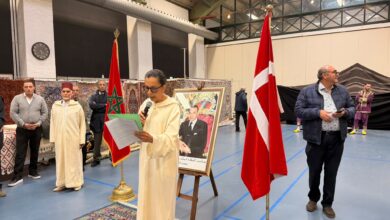
The “Women and Dialogue among Civilizations” project is one of the central international initiatives in the history of Hamsa Sama Al-Thaqafa International Organization and one of the projects through which the Organization carried its vision into the wider fields of intercultural and inter-civilizational dialogue.
The project was founded on a fundamental principle: dialogue among civilizations cannot be complete without the active participation of women as partners in society, agents of change, and contributors to peace, development, education, culture, and social progress.
From this perspective, Hamsa sought to create a space for dialogue between Arab and Western women, enabling them to exchange experiences, discuss shared challenges, address stereotypes, identify common ground, and promote mutual understanding and respect.
The project developed through several stages: it began with a preparatory meeting in London in 2018, moved to the Danish Parliament in 2019, continued through digital platforms during the COVID-19 pandemic, and eventually returned to in-person international engagement in London in 2023.
1. Launching the Project – London, 2018
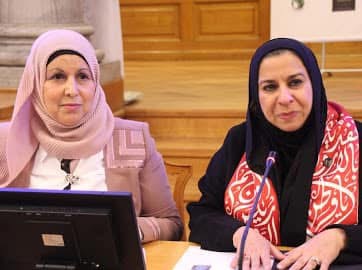
The project was formally launched through the Preparatory Conference on Women and Dialogue among Civilizations, organized by Hamsa Sama Al-Thaqafa in London in November 2018.
The meeting was held at the European Union building in London and represented the first international announcement of the initiative under the title:
“Women and Dialogue among Civilizations”
The meeting served as a preparatory step toward the international conference that the Organization planned to hold in Denmark.
The central idea was to bring Arab and Western women closer through dialogue, introduce the developments achieved by Arab women in political, social, educational, cultural, and economic fields, and discuss common issues affecting women in different societies. (hamsaat.co)
London, with its cultural and civilizational diversity, therefore became the project’s first international point of departure.
2. From London to Denmark
Following the preparatory meeting, Hamsa began preparing for the first international conference in Denmark.
The vision was to transform the initiative from a preparatory dialogue into an international conference bringing together Arab and European figures and delegations to discuss the image, rights, roles, and challenges of Arab and Western women.
A number of organizations and individuals from different countries contributed to the preparations, including the Arab Development Council for Women and Business, the SAND Global Foundation, and the Rehab Family Association of Tunisia. (hamsaat.co)
Thus, the project moved from the stage of an initial idea and preparatory dialogue into the stage of an institutional international conference.
3. The First International Conference – Danish Parliament, 2019
On 12 November 2019, Hamsa Sama Al-Thaqafa International Organization held its first international conference under the title:
“Arab and Western Women and Dialogue among Civilizations”
The conference was held under the dome of the Danish Parliament in Copenhagen.
Approximately 300 participants representing 16 countries attended, and 12 papers were presented addressing issues related to women and intercultural dialogue, with the aim of developing a forward-looking vision for strengthening positive communication between the Arab and Western worlds. (hamsaat.co)
Delegations and participants came from a broad range of Arab and European countries, including Denmark, Sweden, Belgium, Germany, Spain, the United Kingdom, Finland, Mauritania, Sudan, Egypt, the United Arab Emirates, Saudi Arabia, Morocco, Tunisia, Jordan, Iraq, Palestine, and the United States, according to the Organization’s published documentation. (hamsaat.co)
Engineer Shereen Abdul Hafiz Agbaria served as the conference moderator, while Dr. Fatma Abu Wasel Agbaria chaired the conference and announced the successful conclusion of its work.
4. Objectives of the First Conference
The conference was driven by a central question:
Does Western society know about the developments achieved by Arab women and their growing roles in different fields?
Hamsa therefore sought to present Arab women beyond stereotypes that reduce their role to the family sphere and to highlight their presence in leadership, employment, education, politics, culture, and public life.
The conference also sought to:
- Bring Arab and Western women closer together.
- Build bridges of communication between cultures.
- Discuss rights and responsibilities.
- Examine legal and social issues.
- Present Arab women’s experiences.
- Address mutual stereotypes.
- Promote dialogue and understanding.
- Exchange experiences and expertise.
- Support women’s access to leadership positions.
- Strengthen women’s participation in public affairs. (hamsaat.co)
5. Recommendations of the First Conference
The conference produced a number of recommendations emphasizing the importance of correcting the image of Arab women in Western media and the image of Western women in Arab media.
It also called for examining contemporary issues affecting Arab and Western women on the basis of common ground, training and preparing women to reach leadership positions, encouraging women’s participation in public affairs, and developing generations of women capable of contributing to local and international dialogue. (hamsaat.co)
The recommendations also emphasized women’s roles in:
- Peacebuilding.
- Reconciliation.
- Conflict resolution.
- Research and scholarship.
- Leadership.
- Addressing social challenges.
- Combating human trafficking.
- Addressing migration-related issues.
- Promoting security, stability, and development.
They further stressed the importance of fair representation of women in decision-making positions and highlighting women’s achievements through the media and society. (hamsaat.co)
6. Agreements and Partnerships Emerging from the Conference
The impact of the first conference extended beyond its sessions and discussions.
On the sidelines of the conference, Hamsa Sama Al-Thaqafa International Organization signed a cooperation agreement with the UAE Businesswomen Council, chaired by Ms. Farida Al-Awadhi.
The conference also included a mutual recognition and honoring ceremony between Dr. Fatma Abu Wasel Agbaria and Ms. Farida Al-Awadhi. (hamsaat.co)
This step demonstrated the Organization’s intention to transform international dialogue into practical institutional partnerships.
7. The Second Conference – Planned In-Person Event and the Shift to the Digital Sphere
The second international conference was initially planned to take place in Cairo under the title:
“Arab and Western Women and Dialogue among Civilizations”
The published program scheduled the conference for 3–8 June 2020, including an academic, cultural, and social program for Arab and international delegations. (hamsaat.co)
However, the COVID-19 pandemic, together with travel restrictions and the suspension of international gatherings, prevented the conference from taking place in the planned in-person format.
Hamsa responded by transferring the project to the digital sphere rather than suspending it.
8. The Second Conference, 2020–2021 – Online
On 8 March 2021, coinciding with International Women’s Day, Hamsa Sama Al-Thaqafa International Organization held its second conference for 2020–2021 under the theme:
“The Role of Women in Building Societies”
The conference was held online through the Hamsa Net International Platform, in cooperation with the International Doli Net Media Foundation, with broad Arab and European participation. (hamsaat.co)
The program lasted approximately six hours and included papers, presentations, and discussions addressing women’s realities and their roles in building societies.
Representatives from approximately 18 countries presented papers addressing women’s circumstances, experiences, and roles in their respective societies. (hamsaat.co)
According to the published documentation, participating countries included:
Tunisia, Syria, Saudi Arabia, Bahrain, Oman, Yemen, Egypt, Sudan, Palestine, the Palestinian territories inside Israel, Morocco, Iraq, Jordan, Denmark, and the United Kingdom, together with other participants in the international program. (hamsaat.co)
9. Themes of the Second Conference
The conference addressed a wide range of issues, including:
- Women’s role in building society.
- Women and development.
- Women and education.
- Women and employment.
- Women in public life.
- National experiences of women.
- Social and cultural challenges.
- Women’s participation in shaping the future.
Among the papers documented in the conference archive was Dr. Masouma Al-Abdulridha’s paper:
“The Role of Saudi Women in Building Their Society”
This represented the diversity of national experiences that Hamsa sought to bring into the broader civilizational dialogue. (hamsaat.co)
10. Cultural and Media Participation
The second conference was not exclusively academic. It also included cultural and artistic dimensions.
Palestinian artist Rifaat Al-Asadi participated as a guest of honor, alongside Jordanian artist Amal Al-Dabbas. The program also included artistic and cultural presentations. (hamsaat.co)
This expanded the meaning of dialogue to include:
Thought + Culture + Art + Media + Human Experience
11. Closing Ceremony and Honoring of Participants
Following the second conference, Hamsa Sama Al-Thaqafa organized a closing and honoring ceremony for participants and supporters.
The Organization honored a number of participating women and prominent figures from different countries, including:
- Dr. Fawzia Al-Baid from Morocco.
- Ms. Leila Al-Ayari from Tunisia.
- Dr. Iman Najm from Egypt.
- Dr. Masouma Al-Abdulridha from Saudi Arabia.
- Dr. Mawahib Amin Khair from the Palestinian territories inside Israel.
- Ms. Amira Ahmed Al-Khawlani from Yemen.
- Dr. Suhair Al-Muhandi from Bahrain.
- Other figures who participated in or supported the conference.
The Organization also honored a number of individuals who provided logistical and institutional support to the conference. (hamsaat.co)
The closing ceremony therefore represented an extension of the project’s philosophy of building an ongoing international network of women and supporters rather than organizing a conference that ends when its sessions conclude.
12. Continuing the Project During the Pandemic
The third conference was initially expected to take place in person after the pandemic subsided.
However, the continuation of global restrictions related to COVID-19 encouraged the Organization to maintain the project through online platforms.
The digital environment became a means of preserving communication among women and participants from different countries rather than allowing the project to stop because of health and travel restrictions. (hamsaat.co)
13. The Third and Fourth Conferences – The Virtual Phase
The Organization’s historical presentation prepared for the fifth conference in 2023 explicitly states that:
The third and fourth conferences of the Women and Dialogue among Civilizations project were held online because of the COVID-19 pandemic, with extensive international participation. (hamsaat.co)
The archive indicates that this phase reached a significant point with the fourth conference, which focused on:
“Women in the Time of COVID-19”
The conference addressed the impact of the pandemic on women and society.
14. “Women in the Time of COVID-19” – The Fourth Conference
The fourth conference focused on the realities facing women during the COVID-19 pandemic.
It brought together representatives of civil society organizations, women leaders, experts, consultants, business leaders, and representatives of international and youth organizations.
According to the published documentation, participants from more than 50 countries took part through Zoom, and the program extended over several days. (hamsaat.co)
The conference took place during a global period marked by lockdowns and disruption to economic, social, and educational life, producing additional challenges for women.
15. Women’s Issues During the Pandemic
The fourth conference addressed several issues created or intensified by the pandemic, including:
- Health impacts on women.
- Psychological and social consequences.
- Domestic violence.
- Loss of employment and income.
- Distance education.
- Family responsibilities.
- Crisis management.
- Women’s role in responding to the pandemic.
- Protection of women and girls.
- Continuity of community work under exceptional circumstances.
The conference demonstrated the project’s ability to adapt its themes to major global transformations, rather than limiting the dialogue to traditional discussions of women’s issues.
16. Women as Partners in Crisis Response
The fourth conference emphasized that women were not merely recipients of the effects of the pandemic, but also active participants in responding to it.
Women contributed across healthcare, education, social services, media, administration, and other sectors, while simultaneously carrying additional responsibilities within their families and communities.
The conference therefore approached women as:
partners in crisis management, creators of solutions, and essential contributors to building resilient societies.
17. The Fifth Conference – Return to International In-Person Engagement
After the period of virtual conferences, the Women and Dialogue among Civilizations project returned to in-person international engagement in London.
On 22–23 August 2023, Hamsa Sama Al-Thaqafa International Organization – Denmark held the fifth edition of the:
“Women and Dialogue among Civilizations Conference”
in London. (hamsaat.co)
The conference was organized in cooperation with:
- Center for Strategic Research of Migration in the Horn of Africa
- Iraqi Businesswomen Council
- Sudanese Women Initiative in the United Kingdom for Peace and Justice, as the hosting partner.
This edition represented the project’s return to direct international engagement following the pandemic period. (hamsaat.co)
18. The Intellectual Vision of the Fifth Conference
The fifth conference approached intercultural dialogue as a means of bringing perspectives closer together on women’s issues and reducing the gap between Arab and Western approaches to women’s concerns.
The conference addressed women’s empowerment in:
- Political life.
- Social life.
- Cultural life.
- Economic life.
It also emphasized fairness in rights, resources, and opportunities available to women. (hamsaat.co)
The conference further examined the impact of wars, economic crises, migration, and global transformations on women, as well as the importance of reviewing legislation and policies that protect women and support their participation.
19. Objectives of the Fifth Conference
The Organization identified a number of objectives for the fifth conference, including:
- Developing ideas and strengthening concepts related to women’s empowerment.
- Strengthening international cooperation on economic, social, cultural, and humanitarian issues.
- Emphasizing women’s rights and responsibilities.
- Promoting respect for women’s rights and freedom of opinion, expression, and work.
- Seeking solutions to challenges affecting women’s empowerment.
- Building training systems that strengthen women’s capacities.
- Sharing international experiences and expertise.
- Preparing a reference document containing the conference’s conclusions and academic papers. (hamsaat.co)
These objectives demonstrate that the project was not merely a ceremonial celebration of women, but aimed at producing knowledge, recommendations, and networks of cooperation.
20. Themes of the Fifth Conference
The fifth conference addressed a number of themes, including:
Palestinian Women
Economic, social, and cultural challenges facing Palestinian women.
Iraqi Women
Questions of advancement, participation, and empowerment.
Women and Cultural Diversity
Women’s relationship with identity and multicultural societies.
Women in Times of War and Crisis
The effects of conflict, displacement, and instability on women.
Women with Disabilities
Barriers affecting participation and inclusion.
Women and Migration
Challenges of integration, protection, and participation.
Work and Coordinating Priorities
Building a more inclusive world.
The program included papers and interventions from Palestine, Iraq, Sudan, the United Kingdom, and other countries. (hamsaat.co)
21. The Palestinian Presence in the Project
The Palestinian issue and the position of Palestinian women have held a visible place in the project since its early editions.
During the fifth conference, papers addressed Palestinian women and the economic, social, and cultural challenges they face.
Poet Ibtisam Abu Wasel Mahamid, Director of Hamsa Sama Al-Thaqafa International Organization’s branch in Palestine, also participated in the conference’s cultural program. (hamsaat.co)
This reflects the participation of the Organization’s branches and representatives in the international project and the connection between local experience and global dialogue.
22. A Project That Goes Beyond Conferences
The complete history of the project demonstrates that “Women and Dialogue among Civilizations” was not simply a sequence of independent conferences.
From its beginning, the Organization worked to:
- Build an international network of women, scholars, and intellectuals.
- Exchange experiences and expertise.
- Honor participants and supporters.
- Establish partnerships with women’s institutions.
- Connect women’s issues with peace and development.
- Discuss women’s rights.
- Address stereotypes.
- Open channels of dialogue between East and West.
- Move from in-person meetings to digital platforms when necessary.
- Return to international in-person engagement after the pandemic.
This gives the project a strategic and cumulative character.
23. The Identity of the Project and Hamsa’s Vision
The philosophy of “Women and Dialogue among Civilizations” is based on the belief that cultural differences should not become barriers to dialogue.
Arab and Western women may live within different legal, social, and cultural contexts, yet they share many human concerns, including:
Dignity, education, work, family, safety, social participation, freedom of expression, ambition, and the ability to shape the future.
Hamsa therefore sought to create common ground rather than reinforce stereotypes.
24. The Institutional Impact of the Project
The project has contributed significantly to the development of Hamsa Sama Al-Thaqafa’s international network of relationships.
It progressed from:
London, 2018
to:
Danish Parliament, 2019
then to:
Digital platforms, 2020–2021
followed by:
Virtual international conferences during the pandemic
and finally returned to:
London, 2023
This sequence demonstrates the Organization’s ability to maintain the continuity of an international project despite major changes in global circumstances.
25. Historical Timeline
The project can be summarized chronologically as follows:
2018
Preparatory Conference – London
European Union building.
International launch of the project. (hamsaat.co)
2019
First International Conference – Copenhagen
Held under the dome of the Danish Parliament.
12 November 2019.
Approximately 300 participants and 16 countries, according to the published documentation. (hamsaat.co)
2020
Preparations for the Second Conference in Cairo
Planned for June, but the COVID-19 pandemic prevented it from taking place in person. (hamsaat.co)
2020–2021
Second Conference – Online
8 March 2021.
Theme: “The Role of Women in Building Societies.”
Broad Arab and European participation, with approximately 18 countries documented in the program. (hamsaat.co)
2021
Closing and Honoring Ceremony
Recognition of participants, supporters, and cultural figures. (hamsaat.co)
Pandemic Period
Third and Fourth Conferences – Online
The Organization’s historical presentation for the 2023 fifth conference confirms that the third and fourth conferences were held online because of COVID-19. (hamsaat.co)
2022
Fourth Edition – “Women in the Time of COVID-19”
Broad international participation through Zoom, with the Organization reporting participation from more than 50 countries. (hamsaat.co)
2023
Fifth Conference – London
22–23 August 2023.
Return to in-person international engagement following the pandemic period. (hamsaat.co)
26. A Note on the Documentation of the Third and Fourth Conferences
Because the Organization’s published archive does not currently provide a single comprehensive independent record of the third conference containing all dates, themes, and participant lists, while later documentation clearly confirms that the third and fourth conferences were held online because of COVID-19, this historical record does not introduce an unverified date, title, or participant list for the third conference.
The fourth conference, however, is clearly documented in the Organization’s archive under the theme:
“Women in the Time of COVID-19”
This approach preserves the historical integrity of the institutional record and limits the published account to information supported by the Organization’s documentation. (hamsaat.co)
Conclusion
Women as a Bridge for Dialogue… and Dialogue as a Path to Civilization
Over more than five years, the “Women and Dialogue among Civilizations” project developed from an initiative launched by Hamsa Sama Al-Thaqafa International Organization into a sustained international project bringing together women, researchers, intellectuals, and public figures from diverse countries and cultural backgrounds.
The journey began in London in 2018 with the preparatory conference at the European Union building, moved to the Danish Parliament in 2019, where the first international conference was held, and continued through the digital sphere when the COVID-19 pandemic imposed restrictions on international travel and gatherings.
The project did not stop during the pandemic. Instead, Hamsa adapted its methods, maintaining international dialogue through digital platforms and addressing emerging challenges, including the impact of COVID-19 on women and societies.
The project eventually returned to in-person international engagement in London in 2023 through its fifth edition, carrying with it the experience, relationships, partnerships, and accumulated dialogue of the preceding years.
The project demonstrates that intercultural dialogue is not merely a slogan. It is a practice based on:
Listening, mutual recognition, exchange of experiences, respect for differences, the search for common ground, and the transformation of knowledge into cooperation.
At the heart of this dialogue stands woman as:
a builder of families, an educator of generations, a researcher, an intellectual, a leader, a peacebuilder, a partner in development, and an active contributor to shaping the future.
This is the vision embodied in Hamsa Sama Al-Thaqafa International Organization’s project:
“Women and Dialogue among Civilizations”
A bridge between Arab and Western women, a platform for mutual understanding and exchange of experience, and a space for discussing women’s issues beyond stereotypes and artificial barriers.
The history of the project demonstrates that civilizations do not come closer through geographical distance alone, but through dialogue; dialogue succeeds through knowledge and respect; and women are not merely subjects of dialogue, but essential partners in creating it.
The project therefore stands as one of the significant landmarks in the international journey of Hamsa Sama Al-Thaqafa International Organization and as an example of its commitment to building bridges among peoples and cultures, transforming difference into an opportunity for understanding, and making dialogue a pathway toward a more humane and cooperative future.