.png)
Ovarian Reserve: What Your Numbers Really Mean
Raghad Altoubah- Reproductive & Fertility Medical Writer

REPRODUCTIVE HEALTH
Ovarian Reserve: What Your Numbers Really Mean
Evidence-based guide for anyone who wants to understand their fertility picture
Medically reviewed | ESHRE 2023 | ASRM 2023 | ACOG 2022
You have just been handed a lab result with a number on it. Maybe it says AMH 0.9 ng/mL, or AFC 5. Maybe your doctor looked a little serious. Maybe you found this page because you Googled “what is a good AMH level” at midnight.
Take a breath. Numbers on their own can feel alarming, but they are only one piece of a much bigger picture. This guide explains what ovarian reserve tests actually measure, what the numbers mean at different ages, and most importantly, what your options are whether your results come back high, low, or somewhere in between.
What Is Ovarian Reserve?
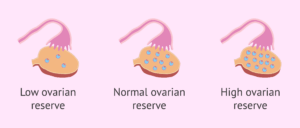
Ovarian reserve is the term used to describe the quantity and quality of a person’s eggs. Every person assigned female at birth is born with a fixed number of immature eggs stored in the ovaries, typically between 1 and 2 million. This number falls steadily throughout life, accelerating after the age of 37. By the time of the last menstrual period, almost none remain.
Unlike sperm, eggs cannot be produced on demand. This biological reality is why understanding ovarian reserve has become such a central part of fertility care and family planning.
Importantly, ovarian reserve reflects quantity, not quality alone. Quality, which refers to whether an egg can be fertilised and result in a healthy pregnancy, is related to age but cannot be directly measured by any current blood test. This is a crucial distinction that is often misunderstood.
The Tests: AMH, AFC, and FSH Explained
Three tests are commonly used to assess ovarian reserve. They measure different things and work best when interpreted together.
Anti-Mullerian Hormone (AMH)
AMH is a protein produced by the small follicles in your ovaries. Because it is released continuously, it can be measured on any day of your menstrual cycle, which makes it practical and widely used. A higher AMH level generally indicates a larger pool of available follicles; a lower level suggests a smaller pool.
AMH does not predict whether pregnancy will occur naturally. Research published in leading fertility journals confirms that in women under 35 trying to conceive naturally, AMH level does not reliably predict the chance of spontaneous pregnancy. Where AMH becomes particularly useful is in predicting response to ovarian stimulation for IVF and in identifying conditions such as polycystic ovary syndrome (PCOS) or premature ovarian insufficiency (POI).
Antral Follicle Count (AFC)
AFC is measured by transvaginal ultrasound, usually in the first few days of the menstrual cycle. A trained sonographer counts the small follicles visible in both ovaries. These antral follicles are the ones that could potentially respond to stimulation in a given cycle.
AFC is one of the strongest predictors of response to fertility treatment. A count below 5 to 7 is generally considered low; a count above 15 to 20 may indicate PCOS.
Follicle-Stimulating Hormone (FSH)
FSH is measured on day 2 or 3 of the menstrual cycle. As ovarian reserve declines, the pituitary gland has to work harder to stimulate the ovaries, which drives FSH levels up. An elevated early-cycle FSH (generally above 10 to 12 IU/L, though laboratory ranges vary) can indicate diminished ovarian reserve.
FSH can fluctuate from cycle to cycle, which makes it less reliable as a standalone marker than AMH. Most current guidelines recommend using AMH and AFC as primary markers, with FSH providing additional context.
What Do the Numbers Mean? A Practical Reference
The table below provides a general guide to AMH and AFC values by age group, based on published population data and clinical guideline thresholds. These are population-level approximations. Individual variation is wide, and no single number defines your fertility.
Sources: ESHRE Ovarian Stimulation Guidelines 2019 (updated 2023); ASRM Ovarian Reserve Testing Committee Opinion 2023; La Marca et al., Human Reproduction 2022.
Low Ovarian Reserve: What It Does and Does Not Mean
A diagnosis of low or diminished ovarian reserve (DOR) can feel devastating. It is important to be honest about what the evidence says, while also being clear about what remains possible.
What low reserve means
- A smaller pool of eggs is available for recruitment in any given cycle.
- Response to ovarian stimulation for IVF may be lower, meaning fewer eggs retrieved per cycle.
- Time may be a more important factor in family planning than for people with normal reserve.
What low reserve does not mean
- It does not mean pregnancy is impossible. Natural conception can and does occur with low AMH.
- It does not mean the eggs you have are poor quality. Quality is primarily driven by age, not quantity.
- It does not mean IVF cannot work. Outcomes depend on many factors beyond egg number alone.
Premature ovarian insufficiency (POI), defined by ESHRE as the loss of normal ovarian function before age 40, is a separate diagnosis with its own management pathway. If AMH is undetectable and FSH is persistently elevated above 25 IU/L on two occasions at least four weeks apart, specialist referral is essential.
High Ovarian Reserve: Is More Always Better?
An AMH above 5 to 6 ng/mL or an AFC above 20 is sometimes considered high. For people pursuing IVF, a good ovarian reserve is associated with more eggs retrieved and, generally, better cumulative pregnancy rates. However, high reserve is not without its complexities.
In PCOS, AMH is typically elevated, sometimes significantly. While this reflects a large follicle pool, PCOS involves hormonal and metabolic factors that affect fertility independently of egg number. If PCOS is suspected, specialist evaluation is recommended.
Very high ovarian reserve also carries a risk of ovarian hyperstimulation syndrome (OHSS) during IVF, a potentially serious complication. Modern protocols, including the use of GnRH antagonist cycles and freeze-all strategies, have substantially reduced this risk.
Ovarian Reserve and Age: The Single Most Important Factor
Age remains the strongest predictor of reproductive outcome. This is not because older eggs are fewer, though they are, but because they are more likely to carry chromosomal errors that prevent successful implantation or lead to miscarriage. This process accelerates significantly after 35 and more steeply after 40.
A 38-year-old with a low AMH and a 38-year-old with a normal AMH for her age have similar egg quality. The low AMH simply means there are fewer eggs available to work with, which matters most in the context of fertility treatment rather than natural conception.
Conversely, a 30-year-old with a low AMH has better egg quality than a 40-year-old with a normal AMH. This is why age and ovarian reserve markers must always be considered together.
Ovarian Reserve in Men: What Partners Need to Know
Ovarian reserve testing applies only to people with ovaries. However, male fertility does change with age: sperm quality declines gradually from around the mid-30s, with increasing rates of sperm DNA fragmentation and chromosomal abnormalities after 40 to 45.
If a couple has been trying to conceive without success, a semen analysis should be performed alongside ovarian reserve testing. In approximately 40 percent of couples experiencing infertility, a significant male factor is identified. Evaluation is not complete without both partners being assessed.
Can You Improve Your Ovarian Reserve?
This is one of the most searched questions in reproductive medicine, and the honest answer is nuanced.
You cannot increase the number of eggs you have. No supplement, diet, or lifestyle intervention has been shown in high-quality randomised controlled trials to meaningfully increase ovarian reserve as measured by AMH or AFC.
What you can do is protect the reserve you have and optimise your overall reproductive health:
- Avoid smoking: Cigarette smoke accelerates follicle loss and is one of the few modifiable environmental factors clearly linked to reduced ovarian reserve.
- Maintain a healthy body weight: Both underweight and overweight status are associated with hormonal disruption that can affect menstrual regularity and fertility.
- Limit alcohol: Heavy alcohol consumption is associated with reduced fertility, though the threshold for harm in moderate consumption remains debated.
- Consider your timing: If family planning is important to you and you have low reserve, earlier action may matter more than optimising lifestyle factors.
- CoQ10 and DHEA supplementation: These are sometimes discussed in the context of IVF preparation for poor responders. Evidence is limited and mixed; discuss with a specialist before starting either.
Fertility Preservation: Buying Time
Egg or embryo freezing allows people to preserve eggs at their current quality for future use. This is particularly relevant for:
- People with low ovarian reserve who are not yet ready to conceive
- Those facing medical treatments such as chemotherapy or radiotherapy that may damage the ovaries
- Individuals who choose to delay childbearing for personal or professional reasons
According to ESHRE and ASRM guidance, egg freezing is most effective when performed before age 35, with success rates declining significantly from 38 onward. For people over 37 with low reserve, the number of eggs retrieved per cycle may be limited, and multiple cycles may be required.
Ovarian tissue cryopreservation is an emerging option for patients who cannot undergo ovarian stimulation (for example, before childhood cancer treatment), and is now considered established rather than experimental by ESHRE.
When to See a Specialist
You do not need to have a diagnosis of low reserve to benefit from a fertility consultation. Consider seeking specialist advice if:
- You are over 35 and have been trying to conceive for six months without success
- You are under 35 and have been trying for 12 months without success
- You have a known medical history that may affect fertility (PCOS, endometriosis, previous ovarian surgery, cancer treatment)
- Your AMH is below 1.0 ng/mL or your AFC is below 5, regardless of age
- You are considering delaying childbearing and want to understand your current reserve
- You have irregular periods or have been diagnosed with POI
Questions to Ask Your Doctor
Walking into a fertility consultation with prepared questions helps you make sense of your results and your options:
- What does my AMH level mean for someone my age, specifically?
- Should I also have an AFC and FSH measured?
- Do my results suggest I should act sooner rather than later?
- Would fertility preservation make sense for my situation?
- Are there any other tests recommended given my history?
- What would natural conception look like for me versus assisted reproduction?
Key Takeaways
- Ovarian reserve describes the quantity of eggs remaining; it does not directly measure fertility.
- AMH and AFC are the most reliable current markers; FSH provides additional information.
- All results must be interpreted in the context of age, which remains the strongest predictor of reproductive outcome.
- Low ovarian reserve does not rule out pregnancy; it means fewer eggs are available and timing may matter more.
- High reserve is generally favourable but can be associated with PCOS and OHSS risk in IVF.
- No supplement or lifestyle change can reverse a declining reserve, though protective behaviours matter.
- If your results concern you, early specialist consultation is always a reasonable step.
This article is intended for general informational purposes and does not constitute medical advice. Always consult a qualified healthcare provider with any questions regarding your reproductive health.